
RESEARCH BRIEF:
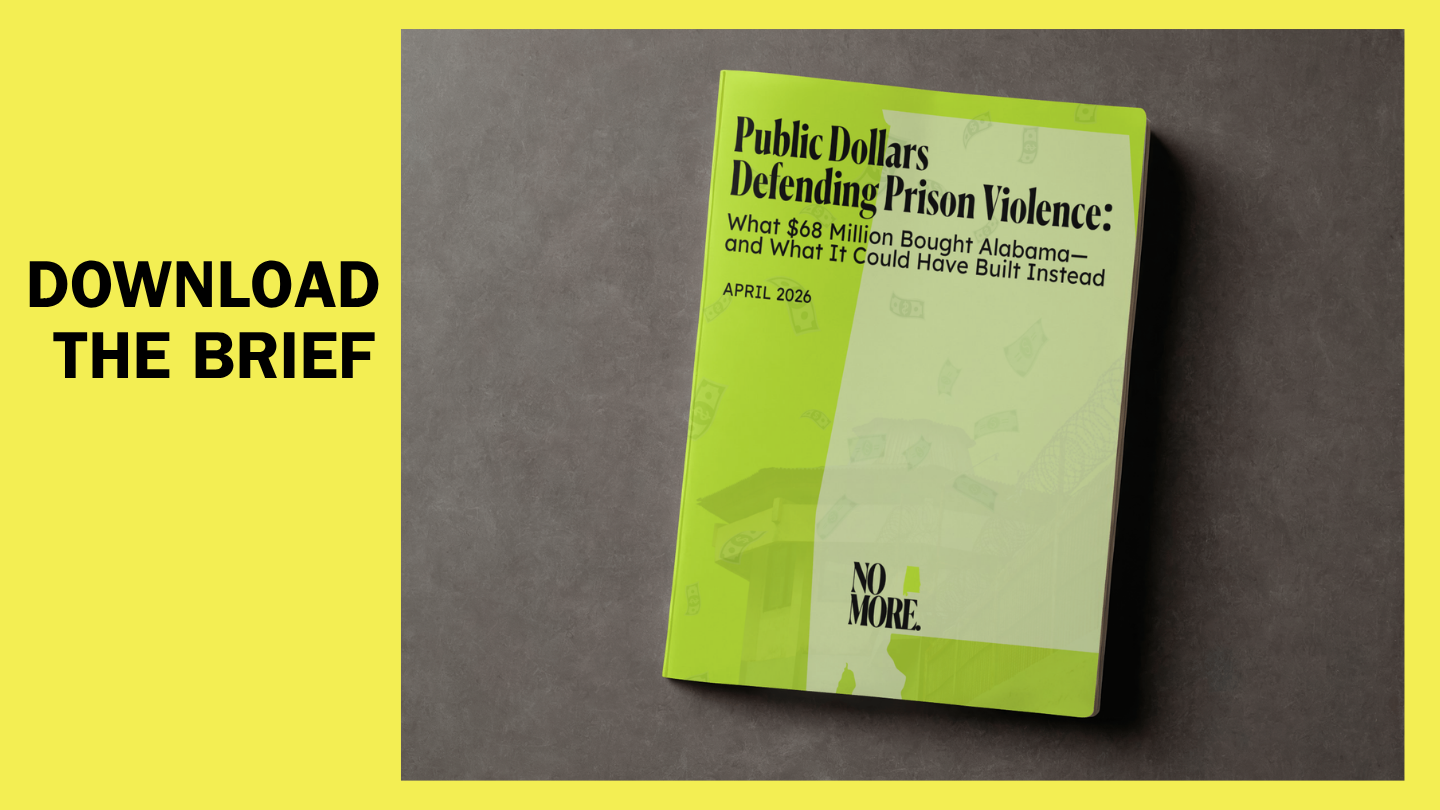
Public Dollars Defending Prison Violence: What $68 Million Bought Alabama—and What It Could Have Built Instead
Executive Summary
Since 2020, the Alabama Department of Corrections (ADOC) has spent at least $68 million in taxpayer dollars on legal defense and settlements tied to violence, neglect, and preventable harm inside state prisons, while protecting abusive officers instead of firing them. This brief documents this spending and presents concrete alternatives that would have made Alabamians healthier, safer, and more secure.
Under the current system, people in state custody have been abused, tortured, sent to hospitals with life-threatening injuries, and even brutally murdered. Steven Davis, whose story is central to The Alabama Solution, was taken to the University of Alabama at Birmingham (UAB) in critical condition, then pronounced dead, after being repeatedly beaten by correctional officer Lt. Roderick Gadson.
Getting rid of abusive, corrupt officers like Lt. Roderick Gadson doesn’t have to cost Alabama millions of dollars.
Time and time again in Alabama, taxpayer funds have been used to defend a system that enables murders, waste, abuse, and corruption, rather than to prevent them. All the while, killer officers like Gadson have been promoted – in his case, twice. The current spending pattern prioritizes defense and damage control. It treats violence, neglect, and failure inside the prison system as a normal outcome to be defended rather than conditions to be corrected.
That same $68 million could have delivered measurable, statewide benefits that make Alabamians healthier, safer, and more secure. For example, we could have paid for:
~3,000 substance use treatment placements, reducing cycles of incarceration and crisis
>1,100 correctional officers for one year, addressing staffing shortages the state itself has cited as a driver of unsafe conditions and ensuring that capacity or resource constraints are not part of the problem
>200 full medical degrees from UAB, expanding the state’s healthcare workforce for decades
~8,500 people receiving a full year of comprehensive mental health care, including therapy, psychiatry, and case management, reducing crises, suicide risk, and E.R. use
68 city-years* of violence interruption and reentry programs, reducing harm before it occurs (*funding one AL city for 68 years or 68 AL cities for one year)
~7,000 people housed post-release, strengthening reentry and reducing recidivism
>13,000 teachers to be supported with retention and classroom funding, stabilizing K–12 classrooms across Alabama at a time when education funds have been reallocated for prison construction
Taxpayer funds have been used to defend the system that produced these negative outcomes, and that waste continues to this day.
RESEARCH BRIEF:
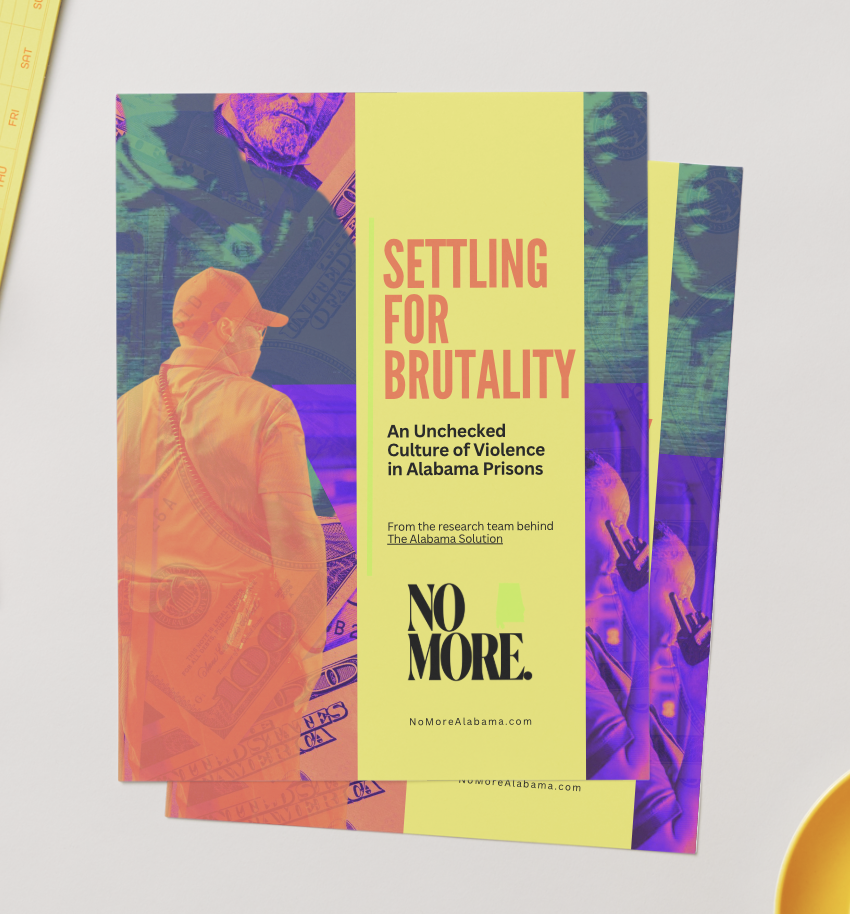
Settling For Brutality: An Unchecked Culture of Violence in Alabama Prisons
Executive Summary
Alabama’s prison system enables officers to frequently and brutally use excessive force. From the fatal beating of Steven Davis documented in The Alabama Solution to many more cases reported by the Department of Justice, the Alabama Department of Corrections has for years maintained a culture that encourages correctional officers to use force excessively. The agency then protects them by failing to properly document, investigate, or hold officers accountable when they cause harm.
In the last five years, the cost to taxpayers for legal claims of excessive brutality against ADOC officers has increased nearly fivefold compared to the prior five years. Yet there has been no systemic change to stop these harms from continuing. Instead, taxpayers are on the hook for astronomical legal bills: since 2020, ADOC has spent more than $68 million on all litigation, including class action and individual lawsuits.
Alabama’s General Liability Trust Fund (GLTF) covers legal expenses for state employees facing civil litigation related to their work. While the fund covers more than 29,000 employees in nearly all state agencies, since FY 2020 the Alabama Department of Corrections has accounted for more than $20 million in taxpayer spending, or 63% of all spending from the fund — more than all other state agencies combined. Many officers with large settlements against them have been promoted within ADOC, and the annual cost of civil litigation against ADOC continues to rise.
Our investigation identified a list of officers who have each been named in three or more lawsuits in the last ten years as active participants in using excessive force. At least half of the lawsuits against each of these officers have ended in paid settlements, guilty verdicts, or are in settlement talks. Each of these officers continues to work for the Department of Corrections, earning an average of $153,000 per year, including both salary and overtime. These individuals are a sign of the deeper problem: an agency whose answer to the growing culture of abuse in an overcrowded and understaffed prison system has been to protect and promote its costliest practitioners.